
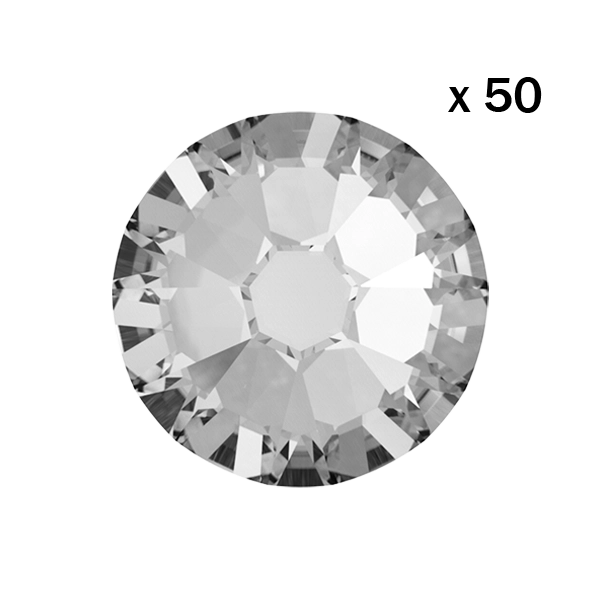
Crystal Swarovski Tooth Gems
Kit + Formation complet
Tout pour débuter sereinement : strass Swarovski premium, formation vidéo, PDF explicatif et certificat.
- Strass dentaires Swarovski premium inclus
- Formation vidéo complète (théorie + pratique)
- PDF explicatif téléchargeable
- Certificat de fin de formation
Swarovski 2058 Crystal (50 pieces)
Choose the Crystal Swarovski tooth gems to combine with other varieties of rhinestones to embellish your customers' smiles.
© Ma formation strass
Tout ce qu'il faut savoir
Frequently Asked Questions
What is the difference between a 2000 and a 2058 crystal?
The 2000 is a flat-back crystal with a simple cut, used in SS3 and SS4 (very small sizes). The 2058 Xilion Rose is the modern evolution with 14 facets (vs 12), +30% brilliance, available in SS5, SS7 and SS9. The 2058 is our bestseller for tooth gem application.
How can I tell if a crystal is genuinely Swarovski?
An authentic Swarovski crystal has perfect calibration (all stones in a batch have the same thickness), a properly silvered Foiled back, and consistent brilliance. Avoid sellers who say "Swarovski-quality" without certification — these are often Preciosa or generic crystals. We source directly from authentic Swarovski Crystal.
How long does a Swarovski tooth gem last?
Between 3 and 18 months depending on application quality, oral hygiene and diet. An application made with professional composite and proper protocol (etching + primer + composite + curing) easily holds 12+ months. Removal is reversible and safe.
Does a tooth gem damage tooth enamel?
No. No drilling, no perforation. The gem is bonded on the surface with a reversible composite used in dental medicine. After removal by a dentist, the enamel returns to its original state — no marks, no damage.
Are tooth gems safe for health?
Yes, provided you use suitable dental materials (composite + primer + phosphoric acid). Swarovski crystals are lead-free and comply with REACH regulations. The application protocol is identical to that of dental veneers.
Can I eat and drink normally with a tooth gem?
Yes, no particular restriction. Just avoid biting directly into very hard foods (cracking a pit, biting a pencil) which could detach the gem. Hot drinks, cold drinks, sugar — no problem.
Does brushing teeth make the gem fall off?
No. Brush normally, even on the gem, with a soft toothbrush and a regular non-abrasive toothpaste. No specific product required. Also use a non-abrasive mouthwash if you wish.
Which gem size to choose for a first application?
SS5 (1.8 mm) is the recommended size to start. Visible enough to make an impression, discreet enough for a first application. SS3 and SS4 are very small (almost invisible at 1m), SS7 and SS9 are statement sizes.
On which tooth can I apply a gem?
All visible teeth in the smile: central and lateral incisors, canines, sometimes premolars. The most popular application remains the upper right lateral incisor (looking from the front). Avoid molars (not visible).
What is the price of an in-office application?
An application at a dentist usually costs between €40 and €90, gem included. Rates vary depending on geographic area and the type of crystal chosen. A trained tooth gem technician can offer rates between €30 and €60.
Is the tooth gem reimbursed by Social Security?
No. Tooth gem application and removal are aesthetic procedures that are not covered by French Social Security (Assurance Maladie) or by complementary health insurance.
Can I apply multiple gems at the same time?
Yes. Many clients opt for 2 or 3 gems in composition (symmetrical alignment, triangle or heart pattern). Discuss the design with your technician beforehand for an optimal aesthetic result.
